


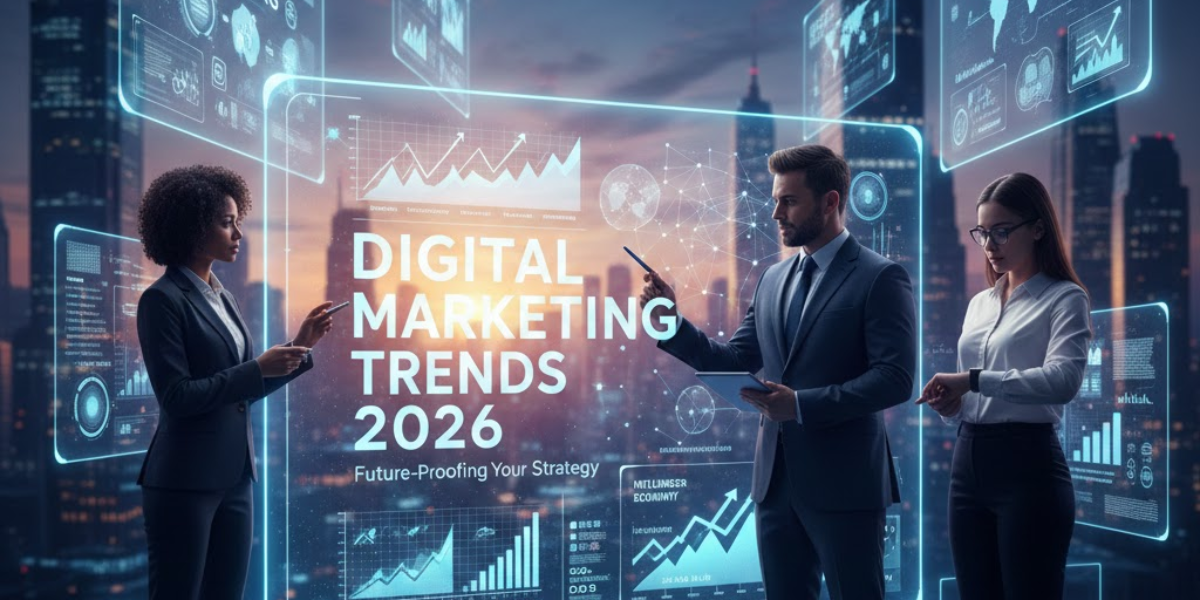
If 2024–2025 felt like “everything is changing at once,” 2026 is the year those changes start to settle into new habits. People are searching inside social apps, trusting peers more than polished ads, and expecting faster, clearer answers. Meanwhile, marketers are juggling tighter budgets, higher expectations, and more tools than ever.
The upside? You don’t need to do all the things. You need to do the right few things—consistently.
This guide breaks down the most important trends shaping 2026, what they mean in plain language, and what you can do about them whether you’re a student, job seeker, freelancer, business owner, creator, or part of a marketing team.
1) The 2026 “Reset”: Clarity and Trust Beat Noise
A lot of marketing advice still assumes attention is unlimited. It isn’t. In 2026, the brands and creators that grow are usually the ones who:
- say one clear thing (not five half-messages),
- show proof (not just promises),
- and make it easy to take the next step.
What’s driving this shift
- People are tired of being “sold to” without being helped.
- AI-generated content is everywhere, so original thought stands out.
- Platforms keep changing formats, but useful content stays useful.
Practical takeaway: Before you plan channels and tactics, decide what you want to be known for. A simple message makes every post, ad, email, and landing page easier to write.
2) AI Becomes Standard—But “Human Quality” Becomes the Advantage
By 2026, using AI for drafts, outlines, edits, and repurposing will feel normal. The difference won’t be who uses AI. It’ll be who uses it without losing their voice or credibility.
Where AI helps most (without making your content bland)
- Turning long videos into short clips and summaries
- Writing rough drafts you can reshape into your own tone
- Pulling topic ideas from FAQs, comments, and support tickets
- Translating content for new audiences (with human review)
The quality rules that still matter
AI can speed up output, but it can’t protect your reputation. In 2026, “good enough” content is easy to produce—so the bar is rising.
A simple quality filter:
- Is it specific, or could it apply to any business?
- Does it include a real example or a clear step-by-step?
- Does it sound like something you would actually say out loud?
This is also where Content Marketing becomes more valuable: thoughtful guides, case studies, and explainers are harder to fake—and easier to trust.
3) Social Platforms Keep Replacing Search (And Your Content Needs to Answer Questions)
More people now “search” on TikTok, Instagram, YouTube, Reddit, and LinkedIn—especially for product research, tutorials, and career advice. In 2026, you’ll feel this shift even if you never call it “social SEO.”
What changes for creators and brands
Instead of only chasing trends, there’s more upside in creating content that answers questions clearly:
- “Which one should I choose?”
- “How do I start if I’m a beginner?”
- “What does it cost?”
- “What mistakes should I avoid?”
What to do this month
Build a small library of “answer-first” posts:
- 5 beginner posts (basic definitions + common mistakes)
- 5 comparison posts (“X vs Y,” “best for…,” “when to use…”)
- 5 proof posts (results, testimonials, process, behind-the-scenes)
If you’re learning Social Media Marketing, this approach is gold because it gives you a repeatable content system—not just random posting.
4) Privacy + First-Party Data: Your “Owned” Channels Matter More
The direction is clear: more privacy rules, fewer easy tracking shortcuts, and more pressure to earn permission.
In 2026, growth is easier when you don’t rely entirely on rented space (platform algorithms) and instead build channels you control—like email lists, communities, and website traffic.
The practical shift
Stop thinking only in terms of “reach.” Start thinking in terms of “relationships you can keep.”
That means:
- a clear reason to subscribe (a useful newsletter, free template, mini-course),
- simple lead capture (one good landing page beats five confusing ones),
- and content that matches what you actually sell.
This is where Digital Strategy shows up in a very real way: your social posts and ads should feed into something you own, so you’re not starting from zero every week.
5) Video Is Still King—But It’s Getting More Efficient and More Measured
Video will keep dominating in 2026, but the trend isn’t “make longer videos” or “make shorter videos.” The trend is: make videos with a purpose, and reuse them smartly.
What’s changing in video content
- Stronger hooks matter more (people decide fast)
- Captions and clarity matter more (many watch without sound)
- Series content keeps attention better than one-off clips
The paid side: creative is the targeting
Even in Display and Video Advertising, the creative itself is often what makes or breaks performance. A clear message and a strong first few seconds can outperform a “pretty” ad that says nothing.
Practical advice (simple but effective):
Create 3 versions of the same video:
- One that starts with the problem
- One that starts with the result
- One that starts with a surprising statement
Run them, watch which one gets better hold time and clicks, then double down.
6) Community, DMs, and Personal Brands: The “Small Circle” Trend
Public feeds are crowded. In 2026, a lot of buying decisions (and hiring decisions) happen after someone:
- checks your profile,
- reads a few comments,
- watches one or two videos,
- and sends a DM.
This affects everyone: freelancers, job seekers, creators, founders, and marketing teams.
What’s working now (and likely still in 2026)
- Niche communities (small but active)
- Broadcast channels / private groups
- DM-based conversations (simple, personal, fast)
If you’re using Digital Marketing to grow a business, don’t ignore what happens after a post performs. People often want a private next step.
Simple DM system (so you don’t get overwhelmed)
- Save 5–10 quick replies for common questions
- Use one link that answers 80% of queries (pricing/booking/FAQ)
- Set response expectations (even a simple “I reply within 24 hours” helps)
And yes—this connects to Social Media Marketing too: engagement is nice, but conversations are where trust forms.
7) Measurement Gets More Honest: It’s Not Just Views, It’s Outcomes
In 2026, more teams are simplifying reporting—not because data doesn’t matter, but because vanity metrics waste time.
Metrics that matter more than “likes”
Depending on your goal, track:
- Leads, bookings, or trials started
- Email signups (and email replies)
- Repeat purchases or retention
- Cost per qualified lead (not just cost per click)
- Sales conversations started (especially for service businesses)
A big part of Digital Strategy in 2026 is connecting the dots: what content drives the right traffic, what pages convert, and what follow-up closes the loop.
8) A Simple 2026 Plan You Can Actually Stick With (30–60 Minutes a Week)
You don’t need a complex dashboard or a 40-page plan. You need consistency and a clear path.
The “simple system” framework
1) Pick one audience and one offer.
Be specific. “Small business owners” is broad. “Local salon owners who want more repeat bookings” is clearer.
2) Pick two channels: one for discovery, one for retention.
Example: Instagram/YouTube for discovery + email for retention.
3) Build three repeating content pillars.
For example:
- Teach (how-to posts)
- Proof (results, testimonials, behind-the-scenes)
- Invite (offers, calls to action, lead magnets)
4) Review monthly, not daily.
Look for patterns, not perfection.
Quick checklist (copy/paste)
- One clear niche + promise (in your bio and website)
- One lead magnet or “reason to subscribe”
- One landing page that’s easy to understand
- 3 content pillars you can repeat without burnout
- 1–2 videos per week (plus repurposed clips)
- A monthly review: keep what works, cut what doesn’t
This kind of plan keeps you flexible for 2026 without chasing every new feature.
Conclusion: The 2026 Advantage Is Being Useful, Clear, and Consistent
The biggest trends for 2026 aren’t secrets. They’re shifts toward simpler, more human marketing: helpful content, proof, privacy-respecting growth, and clear measurement.
If you want a strong starting point, do this: pick one audience, publish answer-first content for 30 days, and build one owned channel (email or community) alongside it. That combination is boring in the best way—and it works.
15 Most-Searched FAQs (with concise, trust-building answers)
Q1: What are the biggest digital marketing trends for 2026?
A: AI-assisted workflows, social search, privacy-first tracking, smarter video, and community-led growth are some of the biggest shifts shaping 2026.
Q2: Is AI content safe for SEO in 2026?
A: It can be, as long as you edit for accuracy, originality, and helpfulness. Thin, repetitive content is what tends to underperform.
Q3: What skills should I learn for a job in 2026 marketing?
A: Focus on writing clearly, basic analytics, video fundamentals, and campaign planning. Knowing how to test ideas quickly is a big advantage.
Q4: Does social media still matter for business growth in 2026?
A: Yes, but it works best when it leads somewhere—like your email list, website, or community—so you can keep the relationship.
Q5: What is Digital Marketing in simple words?
A: Digital Marketing is promoting a product, service, or personal brand using online channels like search, social media, email, websites, and ads.
Q6: What is first-party data, and why is it important?
A: First-party data is information customers share directly with you (like email signups or purchase history). It’s more reliable as privacy rules increase.
Q7: How can small businesses compete with big brands online?
A: Be more specific: niche offers, clear messaging, fast customer support, and consistent content usually beat “trying to appeal to everyone.”
Q8: Is email marketing still effective in 2026?
A: Yes. Email is still one of the most dependable channels because you’re not relying entirely on an algorithm to reach people.
Q9: What content performs best in 2026?
A: Helpful “answer-first” content, comparisons, tutorials, and proof-based posts (results, demos, customer stories) tend to perform consistently.
Q10: How often should I post content to grow?
A: Consistency matters more than volume. For many people, 3–5 strong posts per week is a realistic target.
Q11: What’s the best way to use video without burning out?
A: Record one longer piece, then repurpose it into short clips. Keeping a repeatable format (like a weekly series) also helps.
Q12: Are paid ads still worth it in 2026?
A: Yes, if you have a clear offer and a solid landing page. Ads work best when you test multiple creatives and improve based on results.
Q13: What is Digital Strategy and why do I need it?
A: Digital Strategy is your plan for how channels work together (content, social, email, website, ads) to reach a goal. It keeps you from doing random tactics that don’t connect.
Q14: How do I measure marketing success beyond likes and views?
A: Track outcomes tied to your goal—leads, bookings, sales, repeat customers, or email signups—rather than only surface-level engagement.
Q15: What’s a beginner-friendly 30-day marketing plan?
A: Pick one audience, publish 3 helpful posts per week, create one simple lead magnet, and review what got saves, clicks, and DMs at the end of the month.